

Technology
The Origins of Nanoceramic Technology
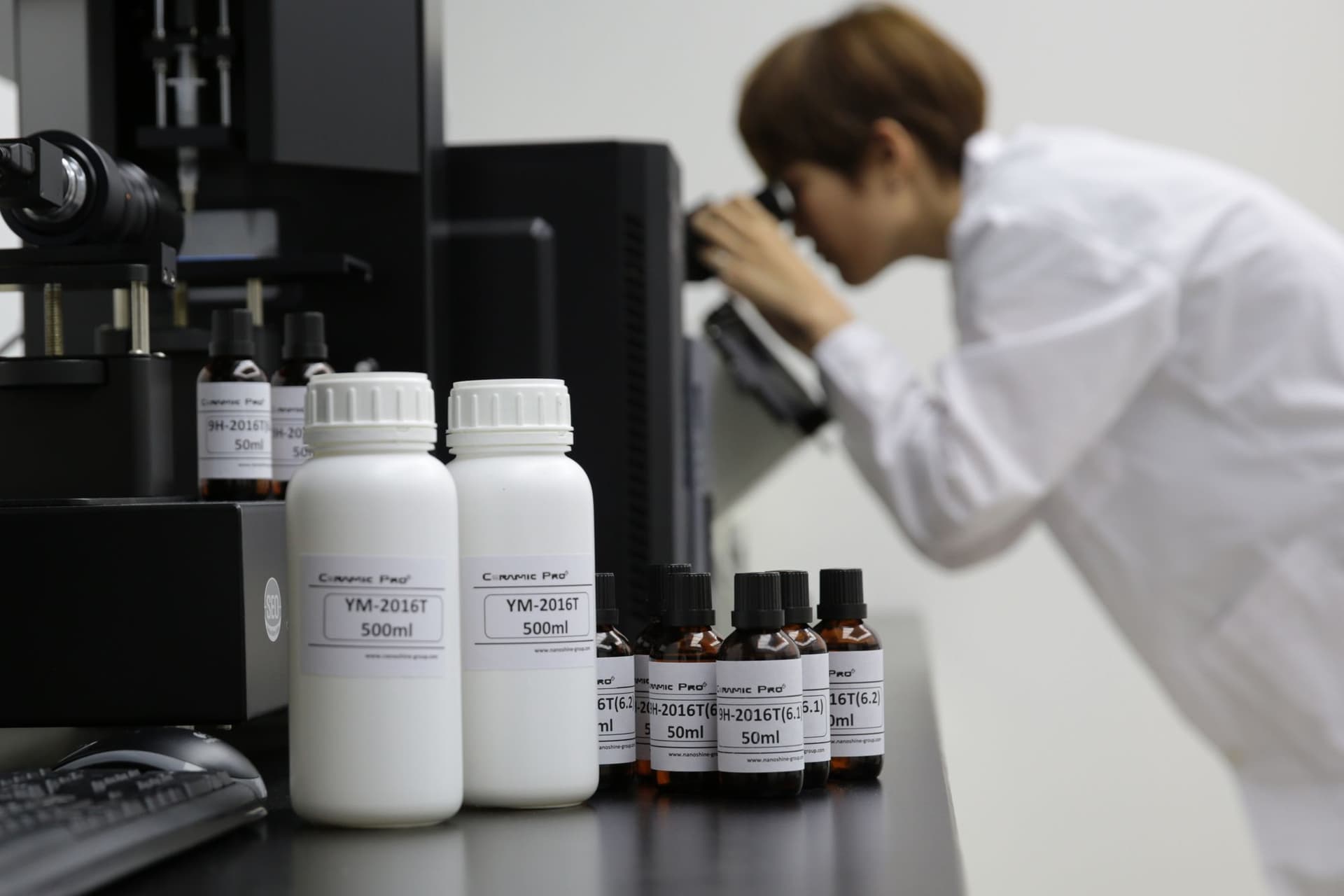
NanoShine Group started with the development of new technology for the production of protective nano-ceramic coatings. This was made possible by new advancements in semiconductor study in the late 2000s. In fact, Ceramic Pro is an offshoot of the technology that enabled smartphones and much of today's smart electronics.
In general, modern semiconductor technology is a very broad topic. Rather, it is the basis on which several other branches of science are developing, often completely different from each other. One of them is the technology of protective nano-ceramic coatings.

Silicon Dioxide (SiO2) Foundation
Ceramic Pro products were originally based on silicon dioxide (SiO2). This material has been known to mankind since ancient times and is widely used in everyday life. So, what is so special about Ceramic Pro nano-ceramic coatings? The answer is found in the word "nano". Nano means 10-9, and in our case, it indicates the scale of the technology. That is, the product itself is produced taking into account the processes occurring at the nano level. The coating is designed to allow control of its properties and structure at the level of molecules and even individual particles.
Nanoparticle Adhesion and Surface Integration
Ceramic Pro products contain nanoparticles that can penetrate the smallest pores and surface irregularities of materials and integrate with their structure, forming a single whole. In this process, at the molecular level, an exchange of ions occurs between the coating and the material on which it is applied. This allows an extraordinary adhesion force between the protected surface and the coating, which is very important for the prolongation of the service life. Under certain conditions, some of our products can last almost forever.
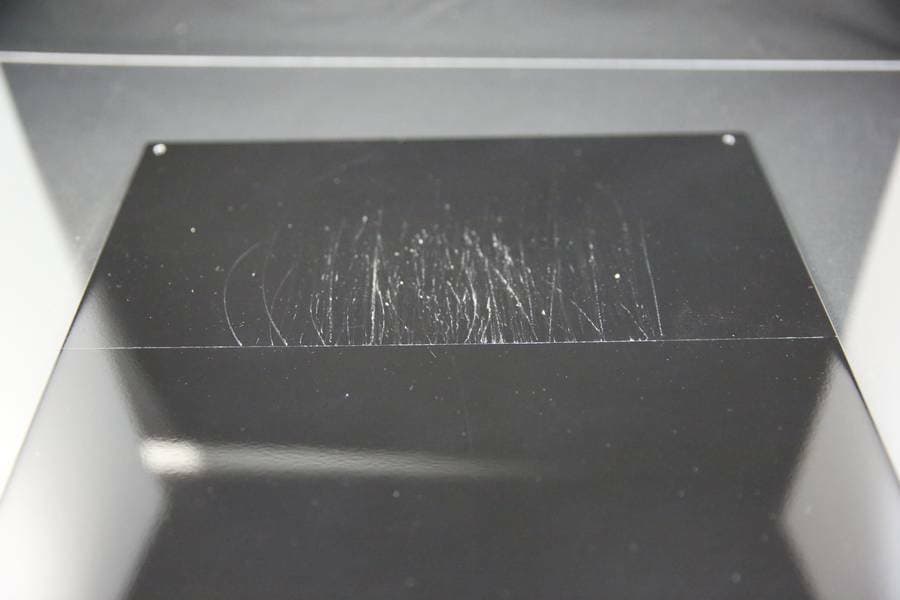
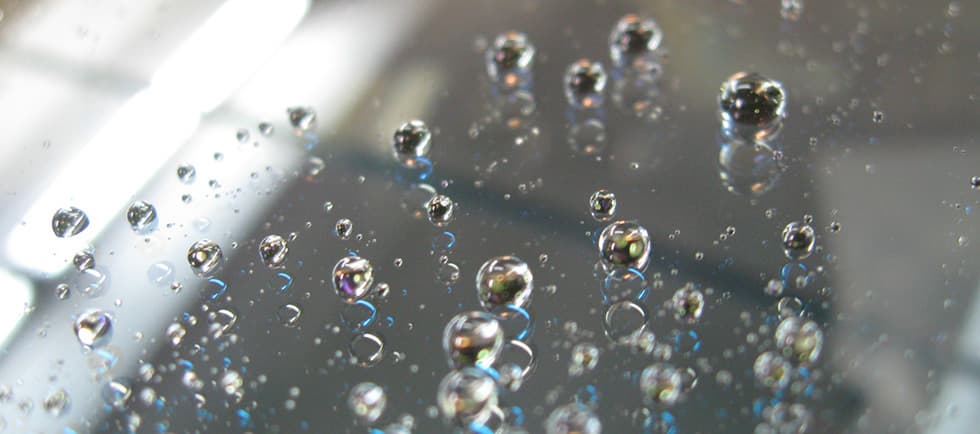
Additionally, this technology makes the treated surface much harder and smoother, as well as water-repellent (superhydrophobic) and self-cleaning. These properties can significantly increase the operational life of surfaces of a large variety of materials, protect them from a wide range of damage, and also make their maintenance much easier.
Titanium Dioxide (TiO2) and Antimicrobial Protection
The next step in the development of Ceramic Pro was the introduction of products utilizing titanium dioxide (TiO2) and silver. This formula has special properties and makes it possible to solve a new type of problem - protection from microorganisms and the consequences of their vital activity. For example, the elimination of unpleasant odors and colonies of harmful microbes.
Remarkably, this technology has a long-term effect and uses the principle of double action. Silver is well-known for its antimicrobial effect, but titanium dioxide is by far more effective in this, although these properties are activated only in the presence of light. This is called the photocatalytic effect. Thus, the use of two active substances provides protection 24 hours a day, regardless of the presence of light sources.
Crystallization and Coating Structure
The choice of the main active ingredients is, of course, very important, but the work on creating a new formula does not end there. Our products contain many other chemicals, although in small amounts. In terms of ratio, their presence is insignificant, but they play a considerable role in imparting the properties of the final product.
One of the most important criteria is the proper crystallization of the coating. In other words, when the solvent evaporates, the molecules must line up in the correct order and form the desired structures. For this, the aforementioned additives are needed - they control complex chemical and physical processes, and allow achieving the desired result even without direct human participation. It can be said that it is a chemical program that controls the construction process of the entire protective coating structure.
Silicon Carbide (SiC) — Next Generation
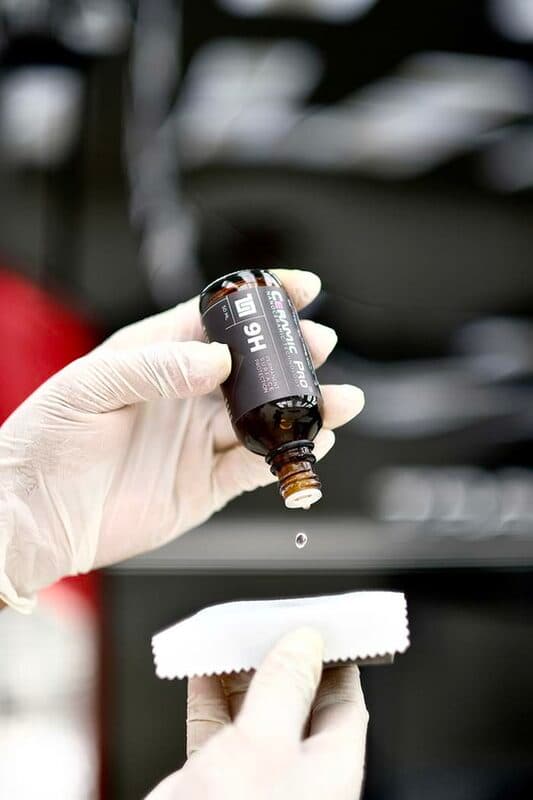
In the latest generation of Ceramic Pro, silicon carbide (SiC) is used as the main active ingredient, which significantly improved the protective qualities of the products. Thanks to the properties of silicon carbide, it was possible to further increase the hardness of the coating, heat resistance, as well as its resistance to aggressive media. In particular, specialized products for protection against acids, alkalis, and high temperatures have been created for use in various industries.
It should be noted that creating such products is not an easy task. For example, it is possible that as resistance to harsh chemicals increases, the hardness of the coating may decrease, or it may become too brittle or too viscous in liquid form, making application difficult. Thus, improving some properties can worsen others. Despite this, a distinctive feature of NanoShine products is an excellent balance that allows achieving the maximum quality and effectiveness of a protective coating for a specific purpose.
Frequently Asked Questions
What materials are used in Ceramic Pro nanoceramic coatings?+
Ceramic Pro coatings are based on three generations of nanoceramic technology: Silicon Dioxide (SiO2) as the original foundation, Titanium Dioxide (TiO2) combined with Silver for antimicrobial properties, and Silicon Carbide (SiC) as the latest generation providing maximum hardness and chemical resistance.
How do nanoparticles bond with surfaces?+
Ceramic Pro nanoparticles penetrate the smallest pores and surface irregularities of the material, then undergo ion exchange at the molecular level between the coating and the surface. This creates extraordinary adhesion force and results in a harder, smoother, water-repellent surface with self-cleaning properties.
What is the origin of Ceramic Pro technology?+
Ceramic Pro technology originated as an offshoot of semiconductor technology developments in the late 2000s. The NanoShine Group applied principles from semiconductor manufacturing to create nanoceramic coatings for surface protection, bringing industrial-grade technology to the consumer market.
How does the TiO2 + Silver antimicrobial technology work?+
Ceramic Pro's antimicrobial protection uses a dual-action principle: Silver ions provide continuous antimicrobial effect, while Titanium Dioxide (TiO2) activates photocatalytic reactions under light to eliminate microorganisms and harmful odors. Together, they provide 24/7 protection regardless of lighting conditions.
What makes Silicon Carbide (SiC) coatings superior?+
SiC is the latest generation of Ceramic Pro's active ingredients, offering significantly improved hardness, heat resistance, and resistance to aggressive chemicals including acids and alkalis. It is specifically engineered for demanding environments where maximum durability is required.
What is the crystallization process in ceramic coatings?+
During crystallization, specially engineered additives control the 'chemical program' that guides how coating molecules align as the solvent evaporates. Proper crystallization is critical — it determines the final structure that gives the coating its protective properties including hardness, smoothness, and hydrophobicity.